

Beaming with natural beauty, tasty food, welcoming locals and historical sites, Aomori Japan has a little something for everyone. Located at the northern tip of the main Honshu Island, the Aomori prefecture surprised and delighted us at every turn, and left us wanting more.
With easy transport options from the capital city of Tokyo, and relatively untouched nature, it’s easy to see why the Lonely Planet listed the Tohoku region as one of their “Best In Travel” destinations for 2020!
Read on to learn about our experience in Aomori, including the things to do there, how to get around, what to expect, where to stay and more.
An Introduction to Aomori
The Tohoku region is comprised of Aomori and 5 other prefectures (which are similar to states/provinces) — Akita, Iwate, Miyagi, Fukushima, and Yamagata. But, the capital city of the Aomori prefecture is also called Aomori.
It’s a little bit confusing!
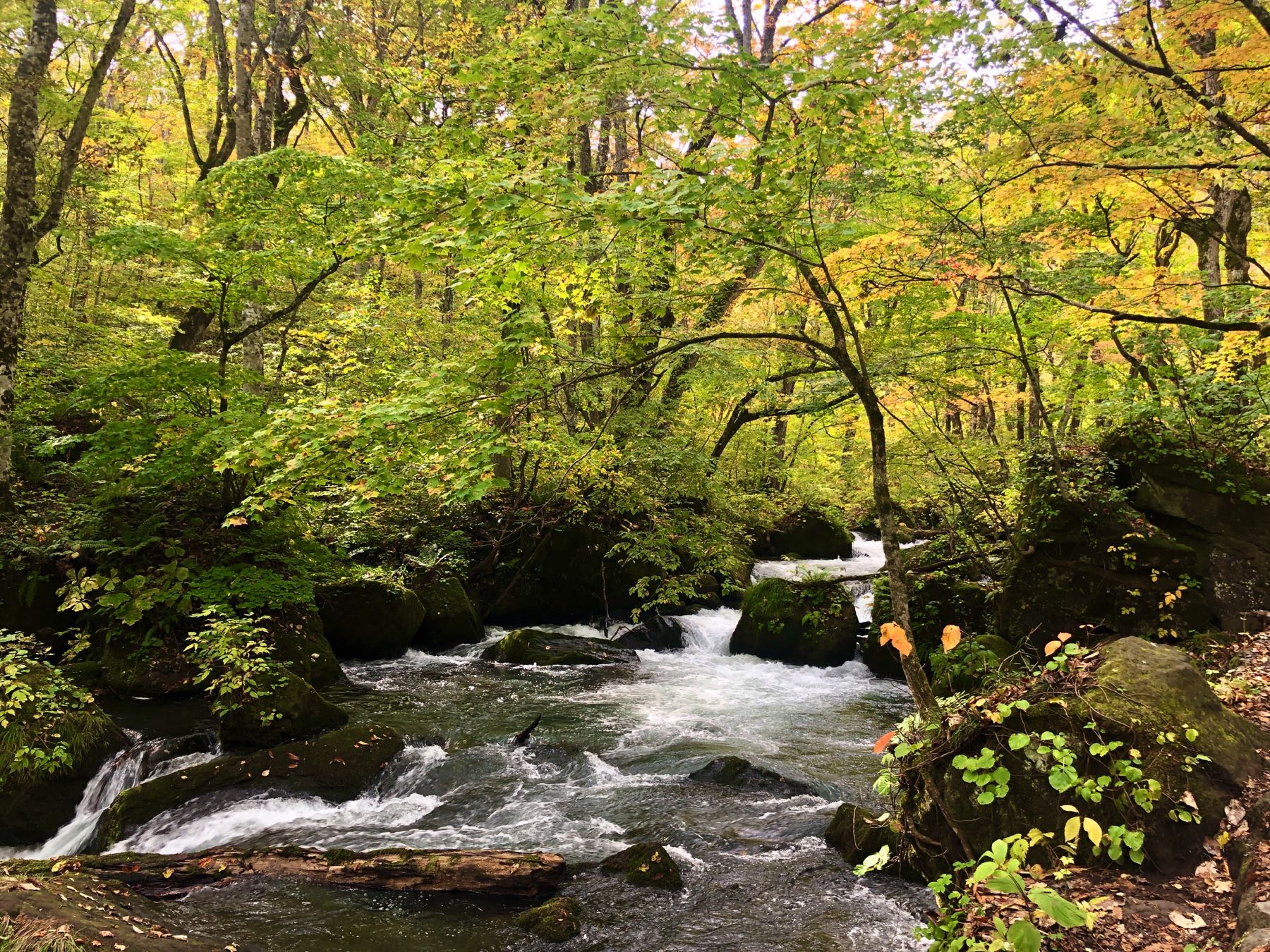
During our recent trip to Japan, we visited the Tohoku region but only the prefectures of Aomori and Akita. It was just a teaser of what this beautiful part of the country has to offer.
Tohoku is known for its incredible natural beauty and welcoming locals, but on top of those things, Aomori, in particular, is also famous for its tasty food.
It’s the largest producer of apples (you’ve probably heard of Fuji apples?), has an abundance of seafood on offer (scallops and affordable sushi), and due to the chilly winters, some hearty, comfort foods are available as well (try the beef bara-yaki, and the vegetable soup kenoshiru).
With volcanoes, mountains, lakes, hot springs, historical sites, parks, and food…Aomori really has it all.
From Tokyo Station, we hopped on the Shinkansen bullet train bound for Shin-Aomori station. The trains in Japan are reliable, efficient, clean…and silent! Talking loudly on a train is a big no-no in Japan.
With a three hour and ten-minute journey ahead of us, we sat back and enjoyed the scenery on the way to Aomori. Not only are the trains comfortable, but they have plug-ins, free wifi, bathrooms and an attendant that comes around offering drinks and snacks.
We arrived at our hotel around 4:00 pm, and between that time and when we went to bed, we had so many wonderful encounters with the people of Aomori City. One man invited us to watch a rugby match on TV with him and his friends, another stopped us in the street to chat about what we were doing in Aomori (and to practice his English), and another just wished us a nice trip.
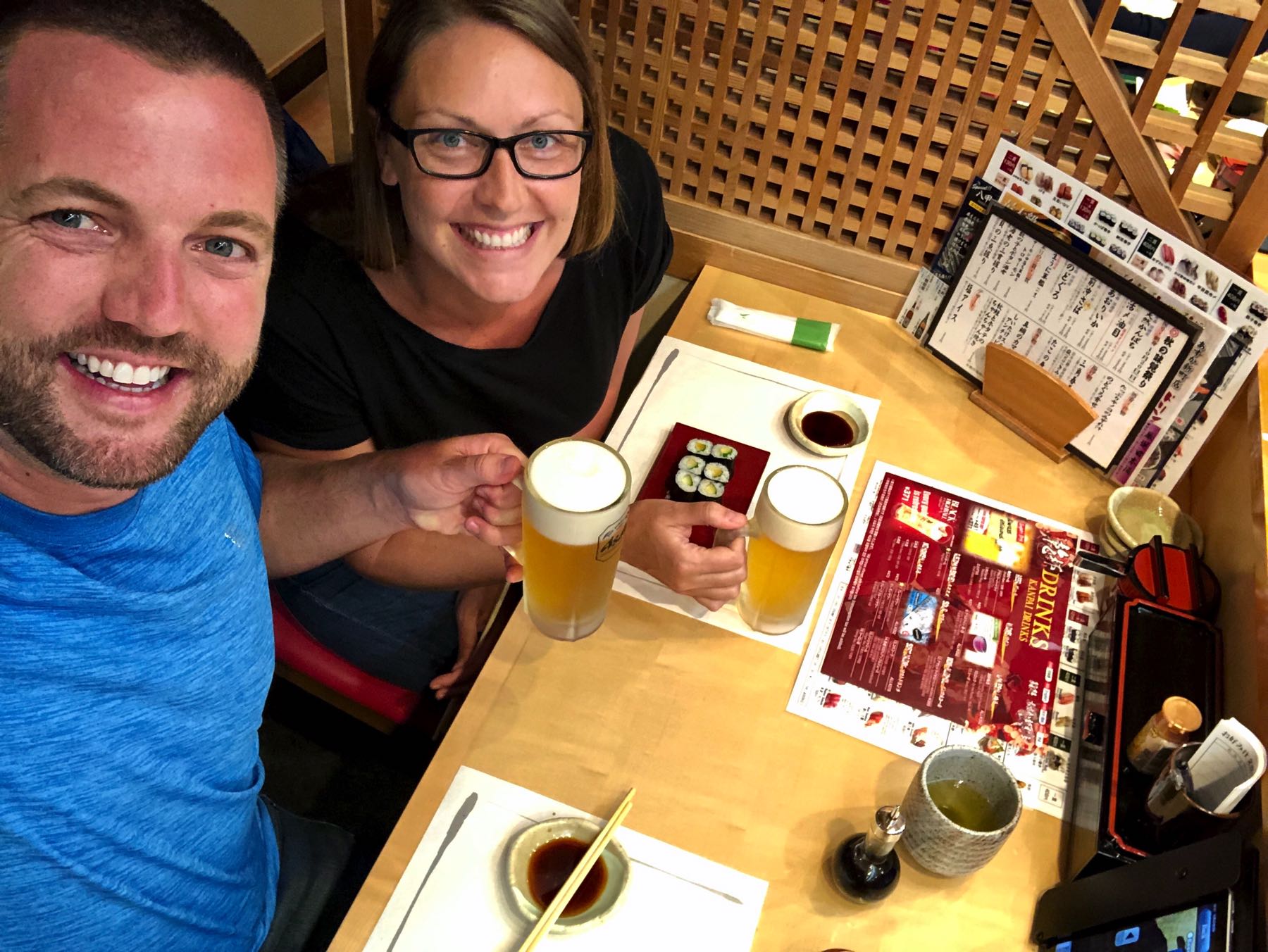
After meeting some kind people, and devouring some of the freshest, delicious and most affordable sushi we’ve had in Japan (at Asuka Sushi Bar), it was time to call it a night.
Our first impressions of this region of Japan were very positive and we couldn’t wait to explore more.
Things To Do in Aomori Prefecture
During our previous visits to Japan, we spent time in Kyoto, Tokyo and Takayama. Apart from some small walks in Takayama, we pretty much just experienced city life and numerous cultural sites as well. This time around, we were looking forward to seeing the natural beauty of Japan — which Tohoku has in spades.
There are a few main areas that are of interest to tourists in this prefecture — Hirosaki, Aomori City, Towada Hachimantai National Park, and Fukaura.
Many of the things to do in Aomori are focused around the stunning Towada Hachimantai National Park, which spans 862 sq. km (333 sq. miles). Here’s a list of some of the top things to do in the Aomori prefecture, based on my firsthand experience.
Canoeing on Lake Towada
A highlight of our entire trip to the region was the hours spent canoeing on the crystal-clear Towada Lake.
This crater lake spans between the prefectures of Akita and Aomori, and has a surprisingly undeveloped coastline. After a quick safety briefing and demonstration from the canoe guide (Ota-san) at Towadako Guidehouse, we were ready to hit the lake. We’ve done lots of kayaking in the past, but even though we’re Canadian, neither of us had properly canoed before!

Finding our balance on the boat was easy and before we knew it we were gliding across the calm, crystal-clear water. This was such a peaceful experience and we enjoyed paddling alongside the colourful autumn leaves and rocky shoreline.
Wander Along the Oirase Gorge in Towada Hachimantai National Park
Flowing from Lake Towada is the Oirase Stream. Running alongside this stream is a 14-kilometer nature trail. This has been listed on many articles as one of the best things to do in Aomori, but for us, even though it was pretty, it wasn’t a major highlight.
Here’s the reason: it runs along a road.
On one side, you have a beautiful stream, some small waterfalls, and lush forest. But, on the other side of the trail, just steps away, is a road.
I’m sure that it’s not always this busy, but when we visited, it was a long weekend and many locals were here enjoying their day off. So, we had lots of foot traffic, and lots of vehicles passing by.
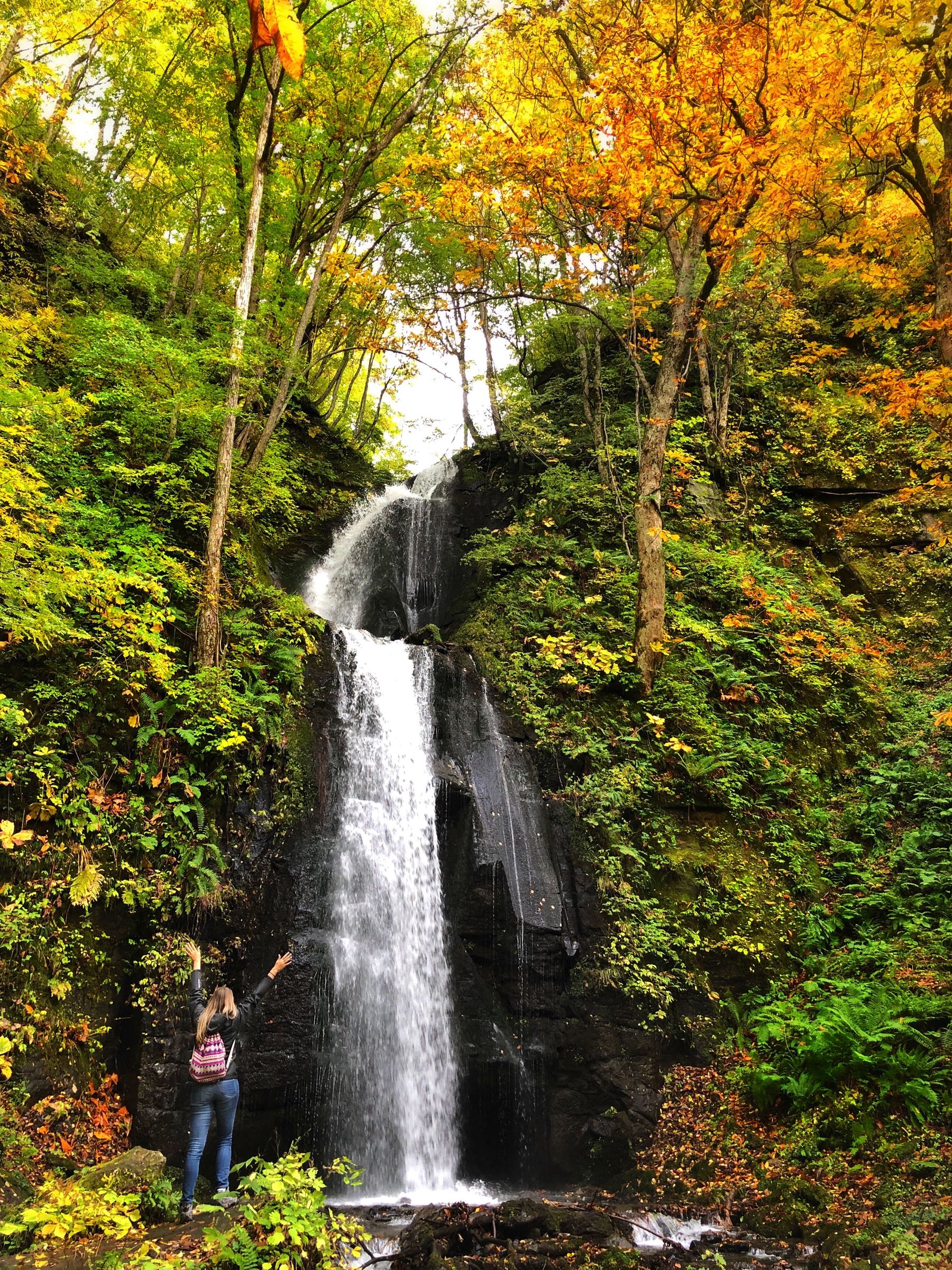
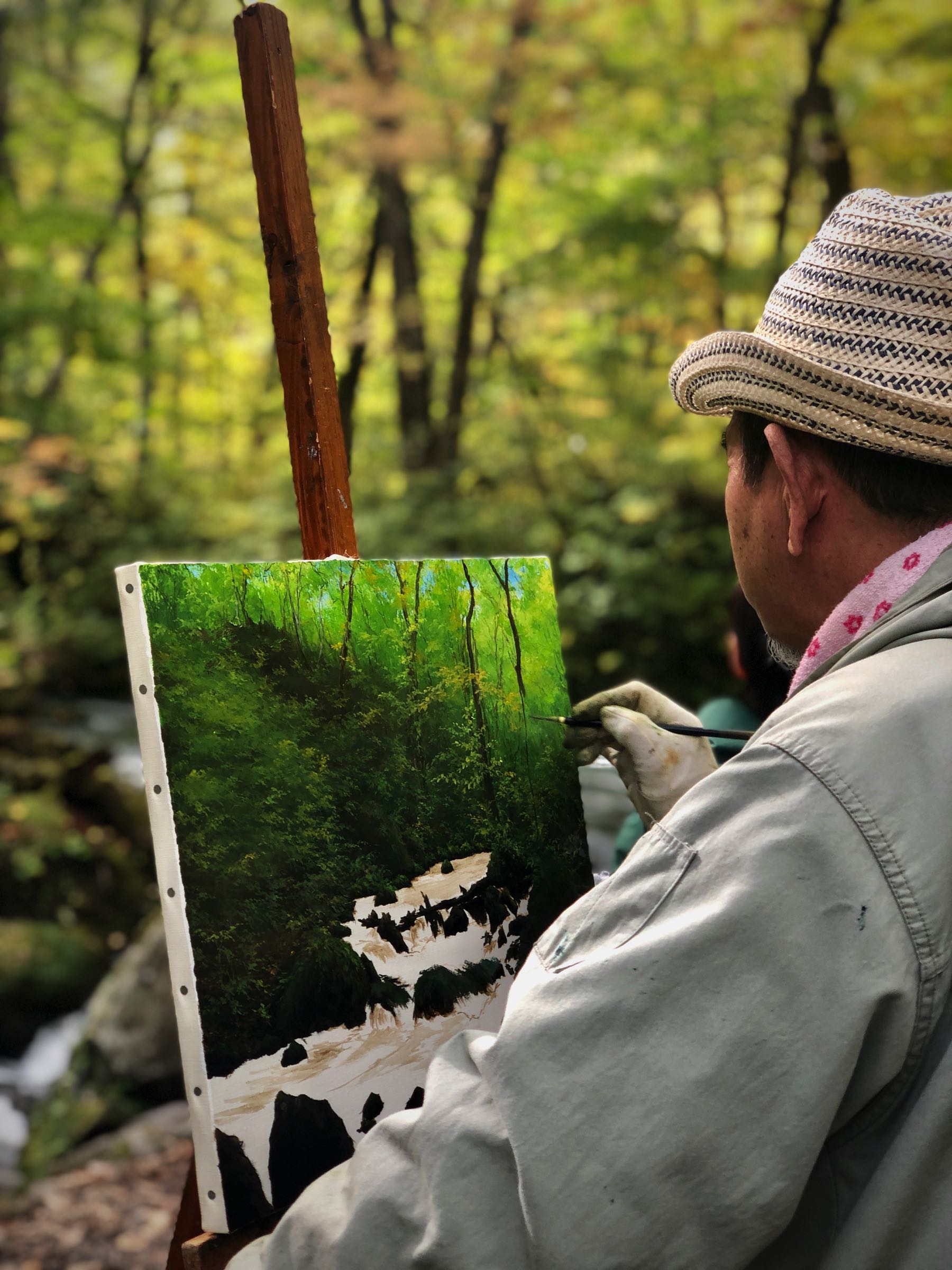
Regardless of how busy it was, we seemed to be the only ones who minded! And, we still enjoyed the fresh, humid air, the Kumoinotaki waterfall, and watching the local artists painting and photographing their beautiful backyard.
Visit the Jogakura Bridge in Towada Hachimantai National Park
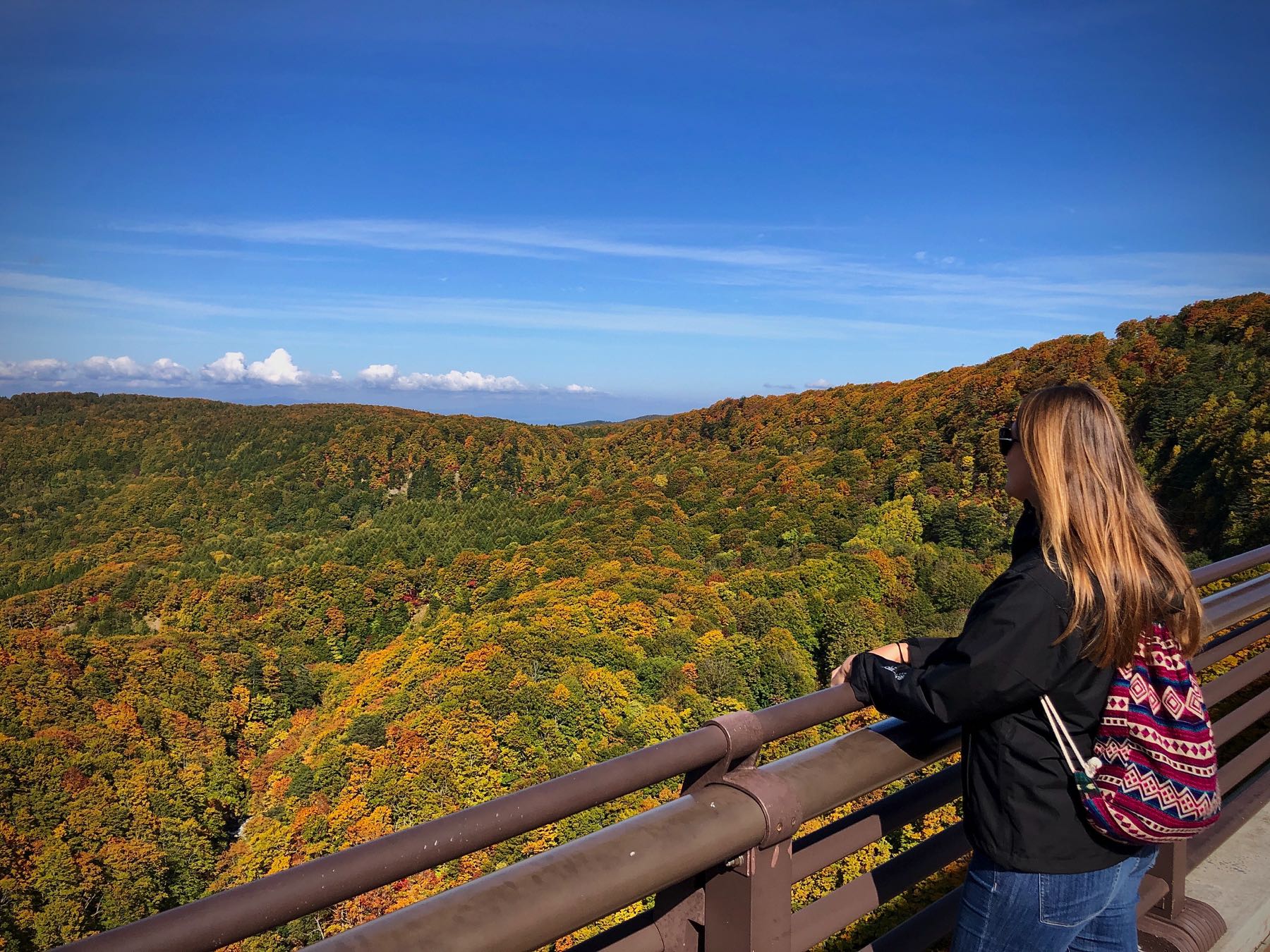
This might not be an ancient site, but this 122m high bridge is a beautiful viewpoint! This bridge connects two areas of the Aomori prefecture (Tsugaru and Nambu) and was built in 1995 to make crossing the Jogakura river easier.
When we visited, people were parking at either end of the bridge and walking the length to take photos from different angles. While it’s not somewhere you’d probably go and see specifically for just photos, it’s a great stop in between destinations.
The Jogakura Bridge offers an amazing view of the autumn colours in the fall, and snowy trees in winter.
Eat All The Apples (Everywhere)
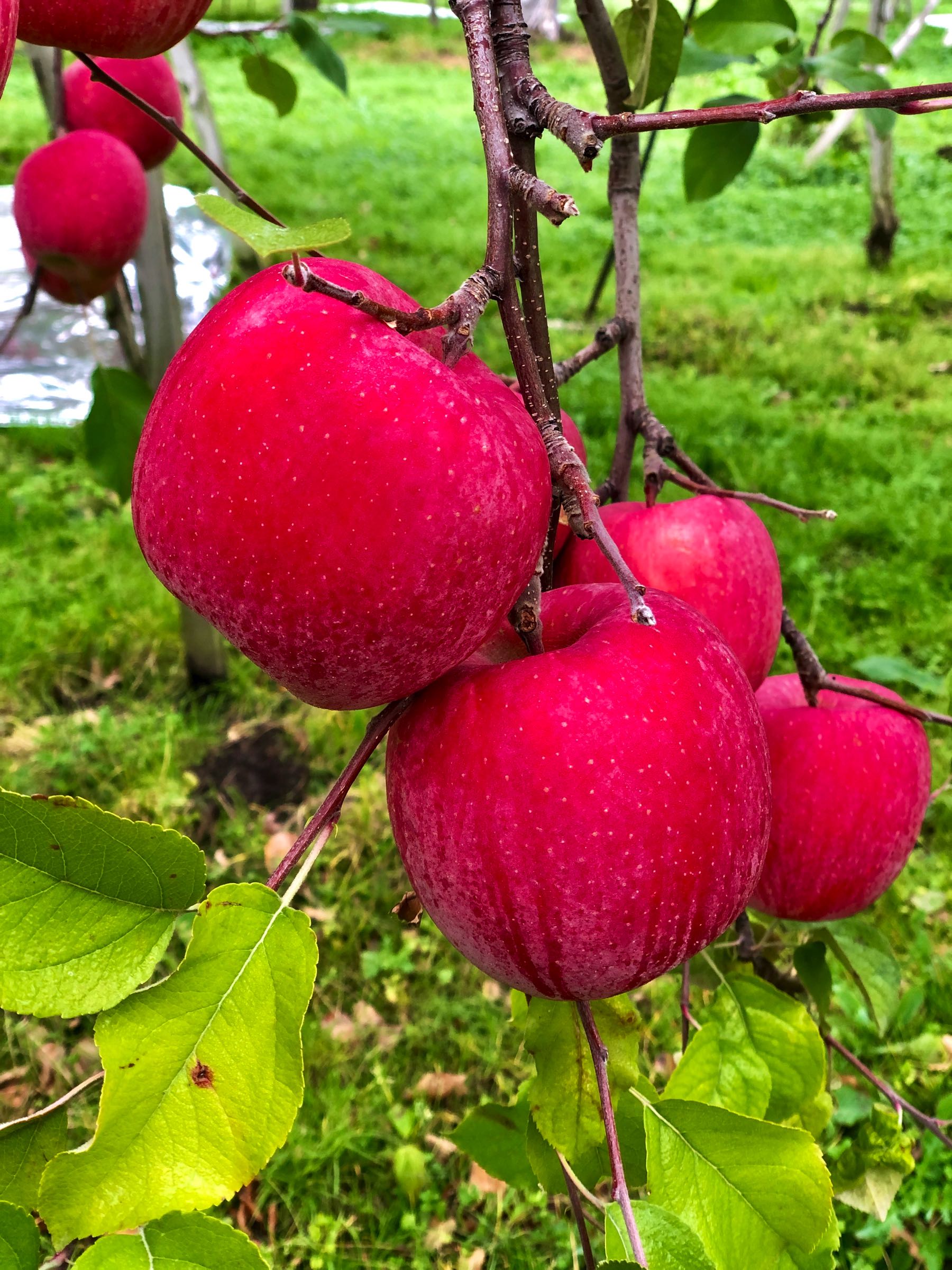
Since Aomori is known for its apple production, it’s no surprise that eating anything and everything to do with apples is a must. At pretty much every restaurant, you’ll find some sort of apple-inspired dish.
We stayed at the aptly named Apple Land Hotel, which had a beautiful ryokan style room and apples floating in the onsite onsen. There was an apple orchard in the backyard, and a massive restaurant with fantastic food featuring (you guessed it) apples! Apple desserts, apple curry, apple sauces, apple sake, apple beer, etc. were all on offer and it was all very tasty.
Another great place to sample some apple delights is at the French restaurant in Hirosaki, Chez Moi. Here, we dined on a 5-course lunch of cod, beef cheek, soup, and dessert — with apples infused into every dish. If you’re a foodie, you won’t want to miss this spot.
Want more apple action? You can actually pick apples at one of the many orchards in Aomori. Click here to learn more about that.
Explore Shirakami-Sanchi Forest (Fukaura)
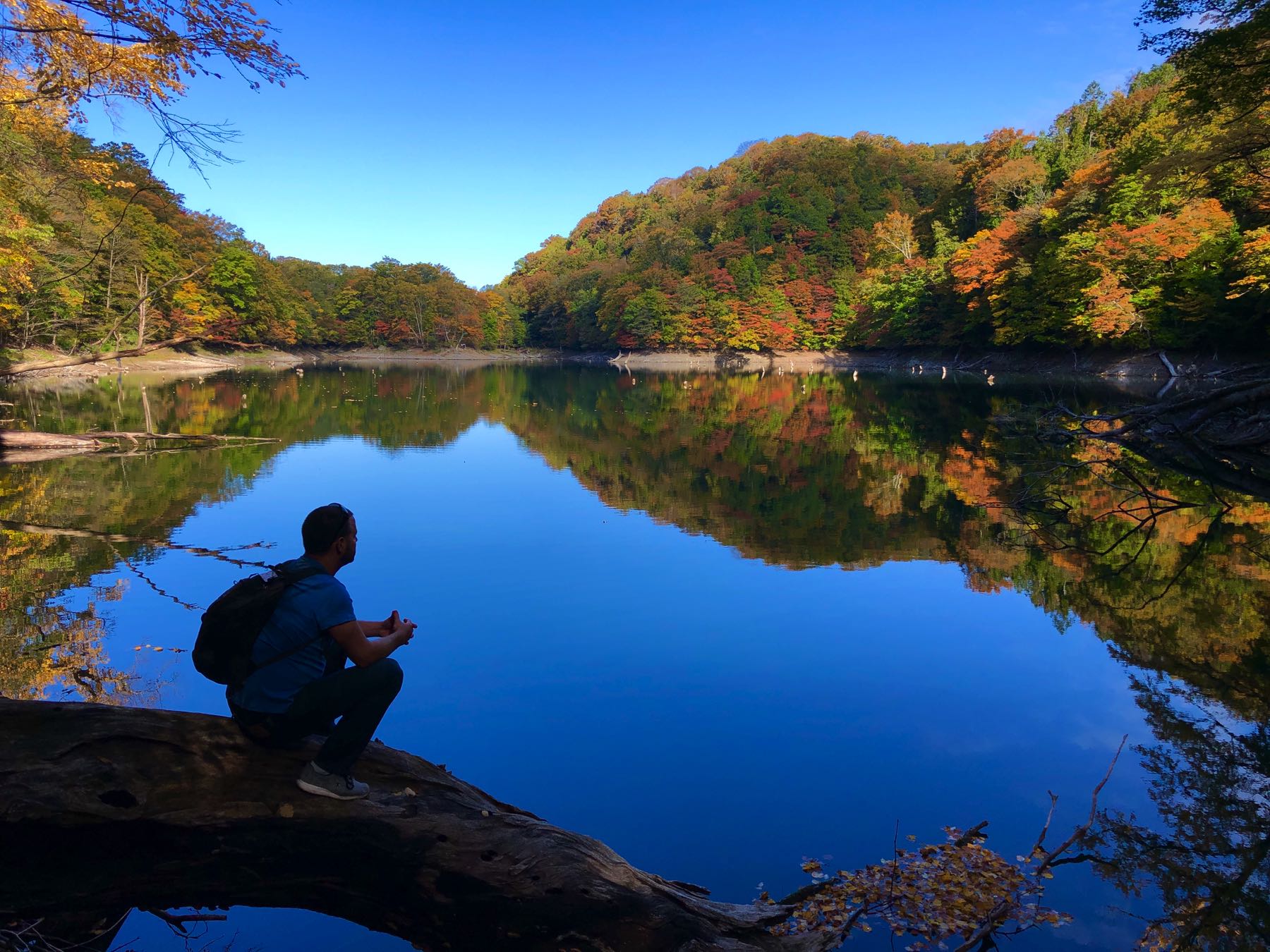
The pristine Shirakami-Sanchi forest area is actually a World Heritage Site. Spanning 130,000 hectares (321,000 acres) across the southwestern part of the Aomori prefecture and the northwestern part of the Akita prefecture, this beautiful place is a great spot to do some hiking around lakes while enjoying the world’s largest beech forest.
There are numerous trails to explore here, plus 33 lakes. “Juniko” translates to “twelve”, so it’s strange that this area of 33 lakes and ponds is called Juniko. We spent a couple of hours hiking around there and enjoying the red, orange and yellow leaves reflecting off of the many lakes. This is somewhere you could spend a whole day soaking up the natural beauty. Click here for a great (English) map of the area.
From Fukaura, it’s a 35-minute direct train ride to the Juniko Station.
Hirosaki Park (Hirosaki City)
Located in the city with the same name, this large park is a nice spot to wander around. This is considered one of the top 3 spots to view the cherry blossoms in the springtime (there are 2,600 trees planted here), and in the fall, you can enjoy the autumn leaves. Not only are the trees a highlight here, but the entire park is surrounded by a moat with small red bridges crossing the water, and historical gates.
The real highlight of Hirosaki Park is the 400-year-old castle — which is the last remaining one from the Edo Period in the Tohoku region.
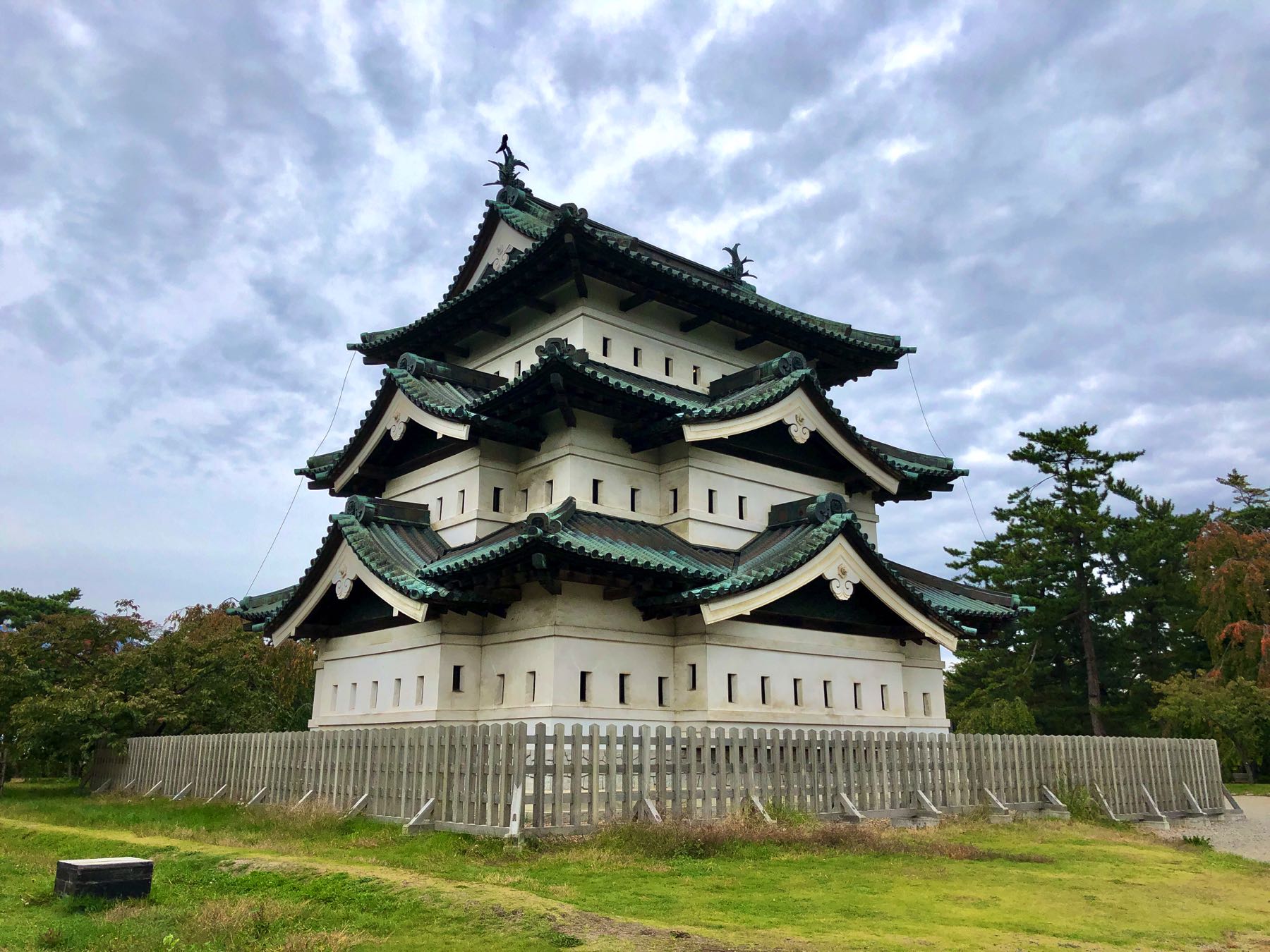
When we visited, the castle had moved. That’s right, the entire castle itself was picked up in one piece, and moved 70m. Apparently, the base was becoming weak, and in order to preserve it, the castle was slowly moved to the side for the structure to be repaired. It’ll take around 10 years to completely restore the base and it’s expected to be moved back to its original place in 2026.
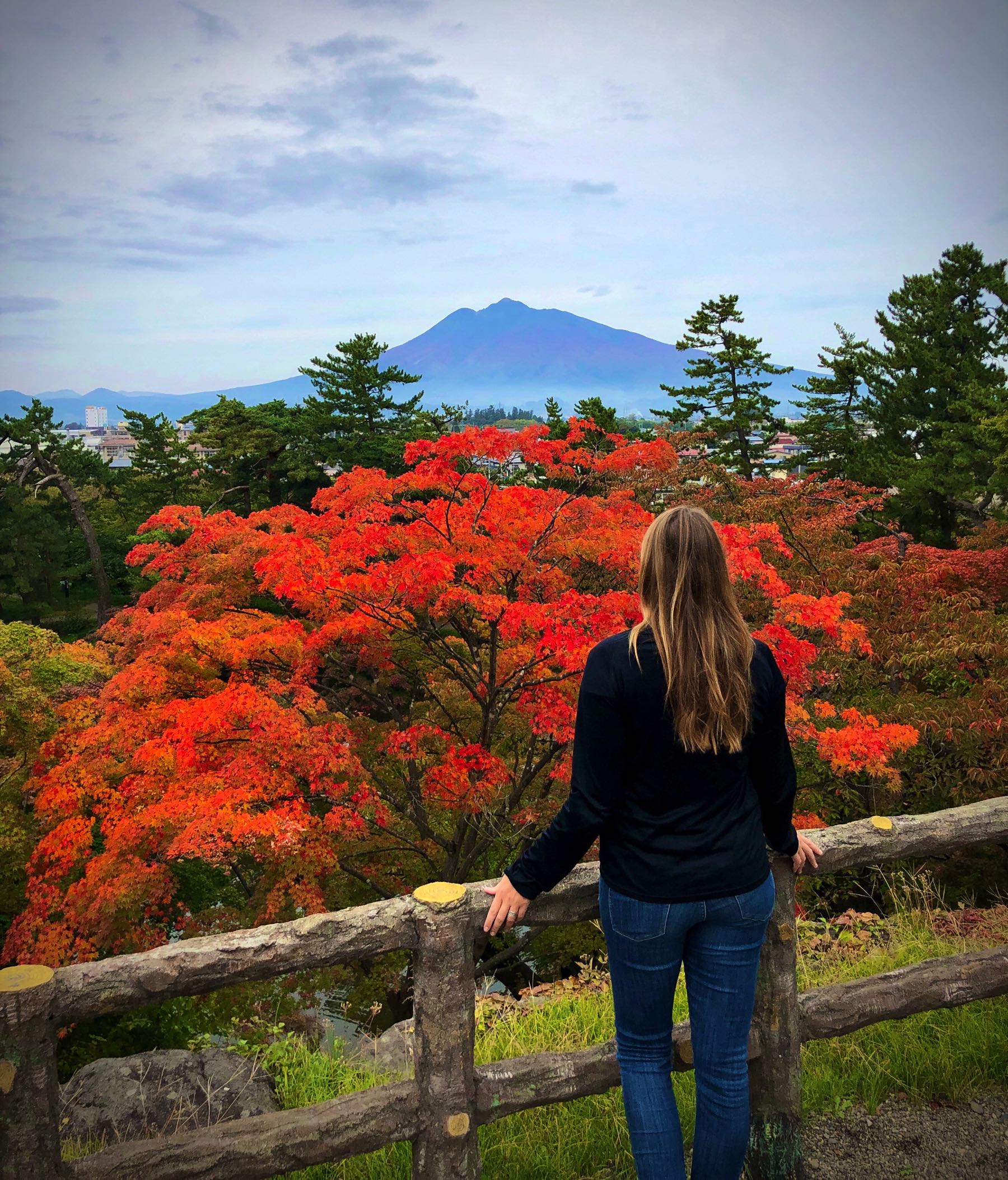
Also, don’t miss the view of the Iwake Volcano from the park!
Visit a Shinto Shrine
We’ve seen a few Shinto shrines around Japan, but here in Aomori prefecture, we visited the 1,200-year-old Iwakiyama Shrine and enjoyed the view of Mount Iwaki volcano in the background. It’s hard to spot, but when you’re walking towards the main shrine, there’s a left turn you can take. There, you’ll see a small hotspring with people sitting around with their feet soaking in the hot water.
Feel free to join in! We did this on the way back to the bus after checking out the shrine.
You’ll know you’re at a Shinto shrine based on the Torii Gates at the entrance. As with any religious building (church, mosque, temple, etc.) there are do’s and don’ts when it comes to visiting and praying at one, but there’s no need to stress and you should definitely visit one during your trip — keep in mind that as a tourist/guest, you won’t be expected to know all of these rules.
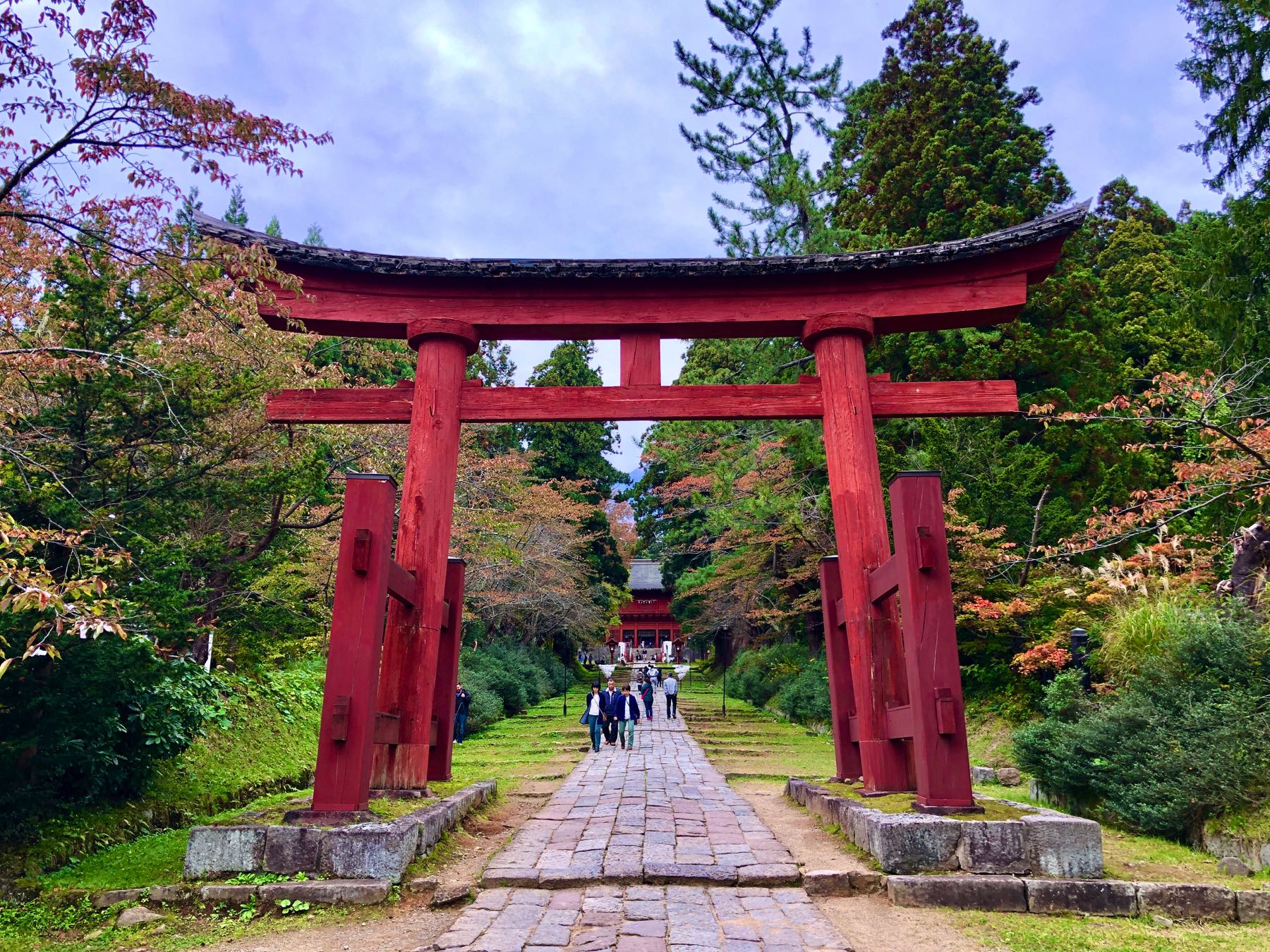
The main thing to keep in mind when entering a Shinto shrine is to bow before entering the torii gates and walk on either the left or right-hand side of the gates, as the center is reserved for the gods.
Before going into the main shrine, make sure to purify yourself with the water out front. Using the ladle, pour water over your left hand, followed by your right hand, and put some water into your hand to rinse out your mouth (but, don’t swallow the water). Once you’re at the shrine, put a coin into the donation box for the deity. Following that, clap your hands two times, say your prayer, clap two more times and bow.
That’s it.
Shintoism is a belief in the ancestors, nature and sacred powers. This faith originated in Japan in the 8th century and is as old as the culture itself. Shintoism has no scripture, books or propaganda and alongside Buddhism, it’s one of the top two beliefs in Japan.
Note: There is a hike you can do from the Iwakiyama shrine to the summit of Mt. Iwaki. This hike takes around 4 hours and if we had more time, we would’ve loved to trek that route. Learn more here.
More Things To Do in Aomori
During our visit, the Hokkada Ropeway (gondola) was under repair and sadly we weren’t able to ride it. But, this is one of the most popular things to do in the area, especially in the fall when you can enjoy an amazing vantage point of the mountains covered in fall colours.
In the Aomori prefecture alone, there are 15 ski resorts. Needless to say, skiing is a popular winter activity here. To learn more about the numerous ski resorts on offer, click here.
The road between the Hakkoda Hotel and Sukayu Onsen is closed during the winter but reopens on April 1st each year. With high snowbanks on either side, walking and driving through this 10m high snowy corridor would be a pretty amazing sight — check out the cherry blossoms one day, and the snow wall the next!
For seafood lovers, don’t miss the Furukawa fish market (Aomori Gyosai Center) in Aomori City. Here you can create your own seafood rice bowl, called nokkedon. Fill your bowl with rice and top it with your choice of seafood — crab, squid, fish, scallops and more.
Getting To and From Aomori Prefecture
To get to Aomori from Tokyo, you can either fly with JAL or take the Shinkansen bullet train (which is what I recommend).
We travelled from Tokyo Station to Shin Aomori on the Shinkansen Hayabusa train (using our JR Rail Pass). This journey was around 3 hours and 20 minutes long. Once we arrived at Shin Aomori, we simply disembarked, walked down some stairs and found the local train line. It was about a 5-minute train ride on the JR Express Tsugaru from Shin Aomori station to Aomori.
Train stations in Japan can be a bit overwhelming. My biggest suggestion is to give yourself a lot of time on travel days. Arrive at the larger stations with plenty of time so you’re not feeling rushed or stressed out. Never be afraid to ask the attendants which gate you should be at, and how to get there. They speak enough English and are more than willing to help you out.
During our trip in Tohoku, we kept saying that having our own rental car would’ve been the best way to see all of the natural sites of Aomori. You can do it by public transport, but having your own wheels will allow you to stop at all the amazing viewpoints, and find your own quiet place for a picnic or a hike.
I don’t recommend hiring a car for the duration of your trip to Japan (as it can be pricey and public transport is so efficient), but maybe just for a day trip to the lakes or mountains in the area.
Final Thoughts
Prior to planning our trip to Aomori, we hadn’t even heard of the region of Tohoku, let alone the Aomori prefecture. Most people have heard of the popular spots in Japan (Tokyo, Kyoto, Osaka, etc.), but if you want to escape the crowds and enjoy a more offtrack part of Japan, don’t miss this Northeast region of the country.
We were here on a quick visit to just get a feel for the prefecture — and even though it was a fast trip, we had a great experience! Due to all the amazing hiking and nature opportunities, we could’ve spent about 10 days – 2 weeks here and enjoyed a more relaxed travel pace.
Visiting Aomori can be done year-round, depending on what you’re interested in doing here. To witness the stunning cherry blossoms, you’ll want to visit at the end of April. Hirosaki Park is one of the top spots in all of the country to see the blossoms, so make sure to book your accommodation well in advance. For those who want to hit the slopes, reserve your accommodation in advance for the peak winter months.
If you want to swim in the Towada Lake, do some walking along the Tanasashi coast, experience the Nebuta Matsuri lantern festival, and enjoy a hot temperature, visit Aomori in the summer months (August for the festival).

For a cooler, comfortable temperature and to witness the fall leaves changing colour, visit Aomori in October/November. The leaves can be viewed from many parts of the prefecture, but the Towada-Hachimantai National Park and the Hokkada Ropeway are great places to enjoy the view.
When you’re planning your next trip to Japan, consider Tohoku. With easy access from the capital, tasty foods and fewer tourists, it’s an area of the country you won’t want to miss.
We were invited by the Tohoku Tourism Board to explore the region and share our findings with you, our readers. This is an area of Japan we would happily return to and would love to spend more time here. As with all promotional campaigns on Goats On The Road, all thoughts, reviews and opinions remain our own — despite any complimentary services received.
The post A Travel Guide to The Aomori Prefecture in Tohoku, Japan appeared first on Goats On The Road.
from Goats On The Road https://ift.tt/2QOl26H


No comments:
Post a Comment